
A grounded, vendor-neutral comparison of UiPath, Microsoft Power Automate and Automation Anywhere for Malaysian banking workloads — BNM RMiT, core banking integration, document understanding and true 5-year TCO.
Every Malaysian bank evaluating RPA eventually asks the same question: UiPath, Microsoft Power Automate, or Automation Anywhere? The vendor pitches are not helpful — they all claim to do everything. The honest answer is that each platform wins in a different bank profile, and the choice depends on three variables: your existing Microsoft investment, your regulatory posture, and how far you intend to scale.
Symprio is platform-neutral — we are a UiPath Fast Track Authorized Partner and a Microsoft Automation in a Day Delivery Partner, and we have implemented Automation Anywhere for Malaysian customers too. This post is the framework we actually use inside banking pitch meetings.

1. The short answer, by bank profile
If you are a Microsoft M365 E5 shop with a strong Azure practice — start with Power Automate. Most scenarios are bundled, your identity / data / audit already runs through Microsoft, and Power Platform has matured hugely in the last 24 months. Reach for UiPath only when the use case outgrows Power Automate's attended-bot comfort zone.
If you run a serious unattended-bot operation (hundreds of bots, regulated processes, AI document understanding at scale) — UiPath is the default. The enterprise orchestration, exception handling and AI Center / Document Understanding stack is still ahead of Power Automate in 2026. Every Malaysian bank we have scaled past 40+ bots has been on UiPath.
If you want cloud-first bot analytics out of the box, no Microsoft lock-in — Automation Anywhere is a solid third choice. In Malaysian banking we see it most often in shared-services centres and in banks that are cloud-first but not Microsoft-aligned.
2. Deep comparison on the five axes that matter
Axis 1: Core banking and mainframe integration
Almost every Malaysian bank has a legacy core (Silverlake, Temenos, Finacle, Oracle FLEXCUBE) plus a newer cloud stack. UiPath's screen scraping and legacy connectors are still the gold standard here — the maturity shows up in exception handling against green-screen terminals and Citrix-isolated cores. Power Automate has narrowed the gap with Desktop Flows, and is fine for cleaner cores, but we have had to rescue several bank projects that tried to run complex Silverlake interactions on Power Automate Desktop alone.
Axis 2: Document Understanding for MyKad / bank statements / claims
UiPath Document Understanding wins here in 2026 — it handles bilingual Bahasa Malaysia + English + Chinese bank statements and medical reports out of the box, with fewer custom models required. Microsoft AI Builder is catching up and is often "good enough" for cleaner English-only documents. Automation Anywhere IQ Bot is serviceable but we rarely recommend it as the primary IDP platform for complex Malaysian documents.
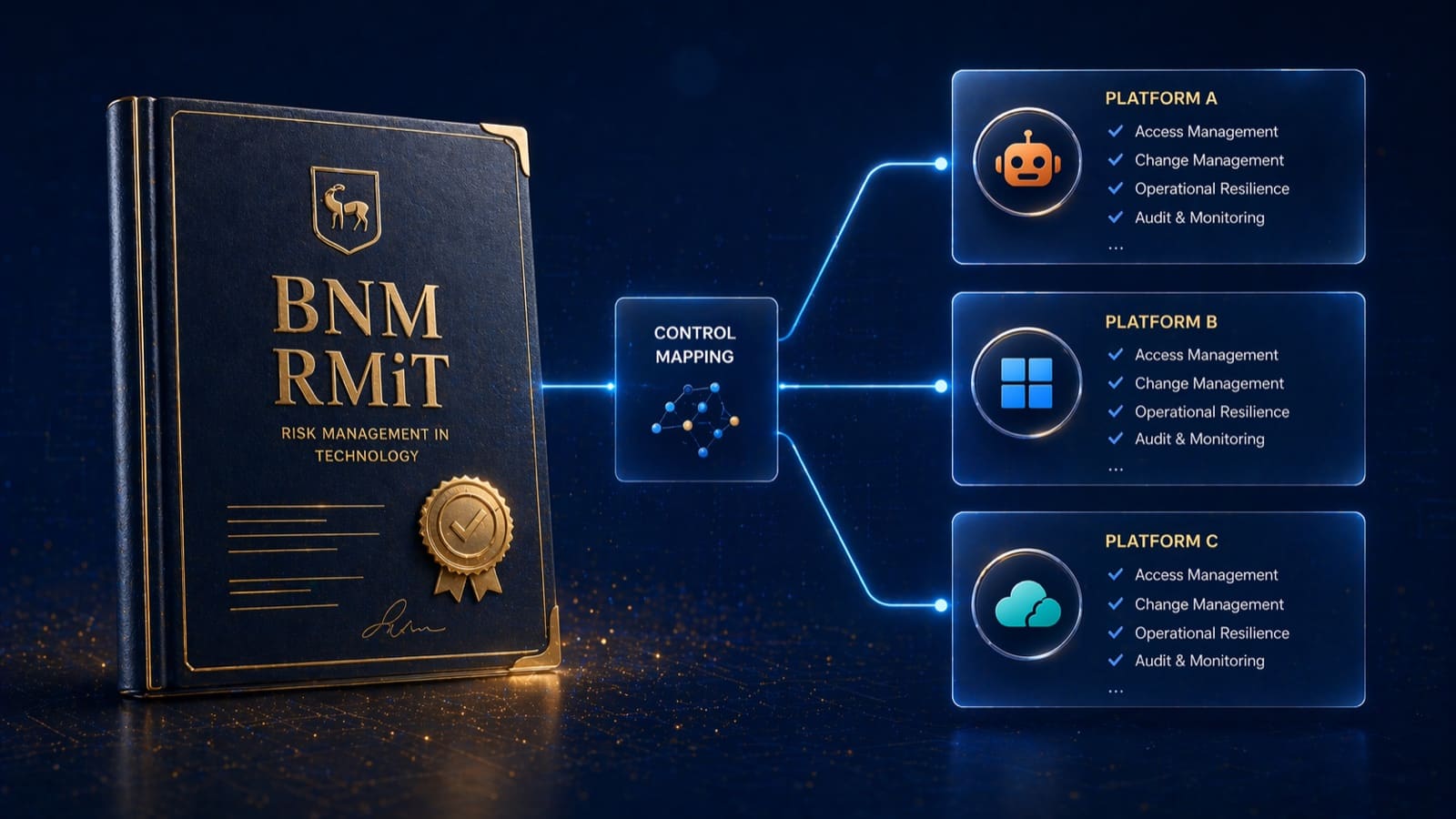
Axis 3: BNM RMiT and PDPA compliance posture
All three platforms can be deployed compliantly — but the effort differs:
- UiPath — mature on-prem deployment story (Orchestrator on your own VMs), full audit trail, granular RBAC. Malaysian-resident hosting straightforward.
- Power Automate — fine if you are already running M365 with Malaysian data residency configured. Requires careful setup of Dataverse regions and DLP policies.
- Automation Anywhere — strong cloud audit, but on-prem option is more limited. Better for banks that have already made the cloud + BNM guidance call.
Axis 4: Total cost of ownership over the long run
Over a multi-year portfolio, the cost hierarchy generally looks like this: Power Automate is the most economical for Microsoft-first shops (bundled licensing + citizen developers do a lot of the heavy lifting). UiPath sits in the middle-to-upper range on licensing but often wins on total cost when you factor in lower exception rates and less rework at scale. Automation Anywhere lands in between, with cloud-first delivery and predictable subscriptions.
The important nuance: Power Automate's headline savings can narrow once your portfolio crosses 50-plus bots, because premium per-flow plans start to accumulate. A sensible evaluation looks at cost per automated outcome — not licensing line items in isolation.
Axis 5: Talent pool in Malaysia
This one is under-rated. Malaysia's UiPath-certified community is large and mature, Power Automate has the broadest pool (partly because many Microsoft 365 admins pick it up as a natural extension), and Automation Anywhere has a smaller but specialised community. If you plan to build an in-house RPA team, platform popularity matters for retention and for the day you need to replace a contract developer.
3. The hidden third variable: your agentic AI roadmap
If you are already thinking about agentic AI — autonomous agents that reason, decide and execute — the platform choice tilts slightly differently. UiPath's Autopilot and Agentic Automation roadmap is the most mature RPA-native path to agents. Power Automate's integration with Microsoft Copilot is powerful if you are already bought into the Microsoft AI stack. Automation Anywhere is playing catch-up.
This actually matters for Malaysian banks running 2026+ roadmaps — a lot of our customers are deliberately picking the platform that best converges RPA and agentic workloads, not just the one that wins on classical RPA today.

Our actual recommendation for Malaysian banks in 2026
Nine times out of ten we recommend a two-platform strategy: Power Automate for business-user automation (citizen developers in Finance, HR, Operations) and UiPath for regulated, high-volume, scheduled unattended bots. This is not fence-sitting — it is what actually works. You use the right tool for each class of work, and you avoid paying UiPath prices for simple M365 workflows or asking Power Automate to run your BNM-facing batch windows.
The last 10% is where one platform wins outright — pure-cloud agile banks that want a single vendor, Automation Anywhere gets a second look. Otherwise, two platforms.
Want help picking? Book a free 30-minute assessment with Symprio — we are genuinely platform-neutral and we will tell you which fits your estate, including the scenarios where you should not buy from us.