Vendor FDEs are tied to one car. OmniFDEs can read any car in the paddock. The 2026 playbook for shipping enterprise AI that actually finishes on the podium.
Why the AI implementation playbook of 2026 needs a race engineer who isn't tied to one car.
🚨 Pop Quiz Time — For Every CIO, CTO, and Head of AI Reading This
In 2026, which of these wins the most enterprise AI value?
A) The team that buys the strongest single AI platform.
B) The team that hires the right engineer — and lets the problem pick the platform.
If you guessed B, you've already understood why the most-watched job title in enterprise AI right now is the Forward Deployed Engineer (FDE) — and why we think the next evolution of it is what we're calling OmniFDE (Omni-Platform Forward Deployed Engineering).
Because the numbers tell an uncomfortable story:
95% of enterprise GenAI pilots show no measurable business impact — MIT NANDA, State of AI in Business 2025.
Over 50% of enterprise AI initiatives will fail to reach production through 2027 — Gartner.
Forward Deployed Engineer job postings grew more than 800% between 2024 and 2025 — Fonzi AI / Extern.
(Sources: MIT NANDA; Gartner via RTS Labs; Extern, 2026)
Translation for the boardroom: the AI models work fine. The deployment is what's broken. And the most expensive role in enterprise AI right now exists to fix exactly that.
Let's tell the story through Formula One.
1. What an FDE actually is — the engineer and the car
Imagine a company that makes the most powerful Formula One car on the grid. The car can win races. By itself, it doesn't win championships.
A racing team buys the chassis. Then they stare at it and ask the question every enterprise CIO has asked in 2025: "Now what? How do we actually win with this?"
So the manufacturer sends a master race engineer to that team. Their job is to make sure this team actually finishes on the podium with that car.
That engineer is the Forward Deployed Engineer.
In the real world, the car is the AI platform — Claude, GPT, Foundry, UiPath, ServiceNow, Power Platform. The racing team is the customer company. And the engineer is someone who:
Walks the garage first. Sits with the driver and the team principal. Understands the operating model, the data, the priority races on the calendar, the conditions the car actually has to race in.
Tunes for real. Writes production code, builds the agents, retrieval pipelines, evals, integrations into the team's existing systems. Sets the car up for the track in front of them — not the showroom it left.
Trains the pit crew. Hands the setup over to the team's own engineers and operators with telemetry runbooks, setup sheets, and the playbook for the season ahead.
Stays close enough for the next race. Comes back for new tracks, new conditions, the problems that surface in qualifying six months later.
In one line: consult → build → train, all in the same engineer, all inside the team's garage.
It's the most engineering-credible, customer-embedded role in enterprise software today. And right now, every AI vendor wants their engineers in your garage.
2. Why FDEs are suddenly everywhere

The FDE wasn't invented in 2025. Palantir built its entire business model around it — and that model now looks vindicated. Palantir reported 85% year-over-year revenue growth in Q1 2026 and a 640% return over five years, much of it attributable to the FDE motion (Source: MindStudio).
What's new is that everyone else has decided to copy it:
Anthropic announced a $1.5 billion enterprise joint venture in May 2026, backed by Blackstone, Hellman & Friedman, and Goldman Sachs — built around customer-embedded engineers (Source: MindStudio).
OpenAI formalised its FDE motion as "The OpenAI Deployment Company" — a $4 billion+ joint venture with Bain, Capgemini, McKinsey, TPG, and Brookfield as founding partners. Launched May 11, 2026 (Source: MarkTechPost).
Accenture × Microsoft launched a dedicated forward deployed engineering practice in March 2026.
Google is hiring aggressively. Cohere, Scale AI, Databricks, Salesforce all followed.
Median FDE base salaries land between $135,000 and $163,000. Senior total comp at Anthropic and OpenAI can reach $350,000–$550,000 (Source: Extern).
The bet is identical across all of them: the trillion-dollar prize is not licensing a chatbot — it's owning the workflow inside a Fortune 500. And the only way to own a workflow is to send engineers into the garage.
Translation: every major AI vendor now has, or is building, an engineering team they want to send to your team's garage.
So why is your AI still finishing nowhere on Sunday?
3. The catch — every manufacturer's engineer only knows their own car

Here's the problem nobody puts on the pit board.
A manufacturer's race engineer only knows their own car.
A Ferrari engineer can read a Ferrari like sheet music. Put them on a McLaren and the telemetry is just noise.
An Anthropic FDE will architect every problem as a Claude problem.
A Palantir FDE will model every problem as an ontology in Foundry.
A UiPath delivery engineer will frame every workflow as Studio + Orchestrator.
A ServiceNow consultant will route every process through ServiceNow.
This isn't a criticism of those engineers. It's the gravity of the contract. Their compensation, their renewal incentive, and their roadmap visibility are all tied to one car.
The trouble is that almost no enterprise problem in 2026 fits one car.
A real motor-claims automation needs document understanding (one platform leads here), reasoning over policy language (another platform), workflow orchestration (a third), a user interface (a fourth), and integration with a legacy claims system (something else entirely). Multi-LLM environments are now widely expected to become the default (Source: INRY — Knowledge 2026).
The result, predictably: architectural fragmentation, duplicated compute costs, governance gaps, and vendor lock-in disguised as "platform strategy" (Source: Trantor — Enterprise AI Platforms 2026). The very thing FDEs were sent in to fix, they sometimes make worse — because each manufacturer's engineer only tunes their own car, and quietly dismisses the rest of the paddock.
You need an engineer who isn't tied to one car.
4. Introducing OmniFDE — the engineer who can read any car
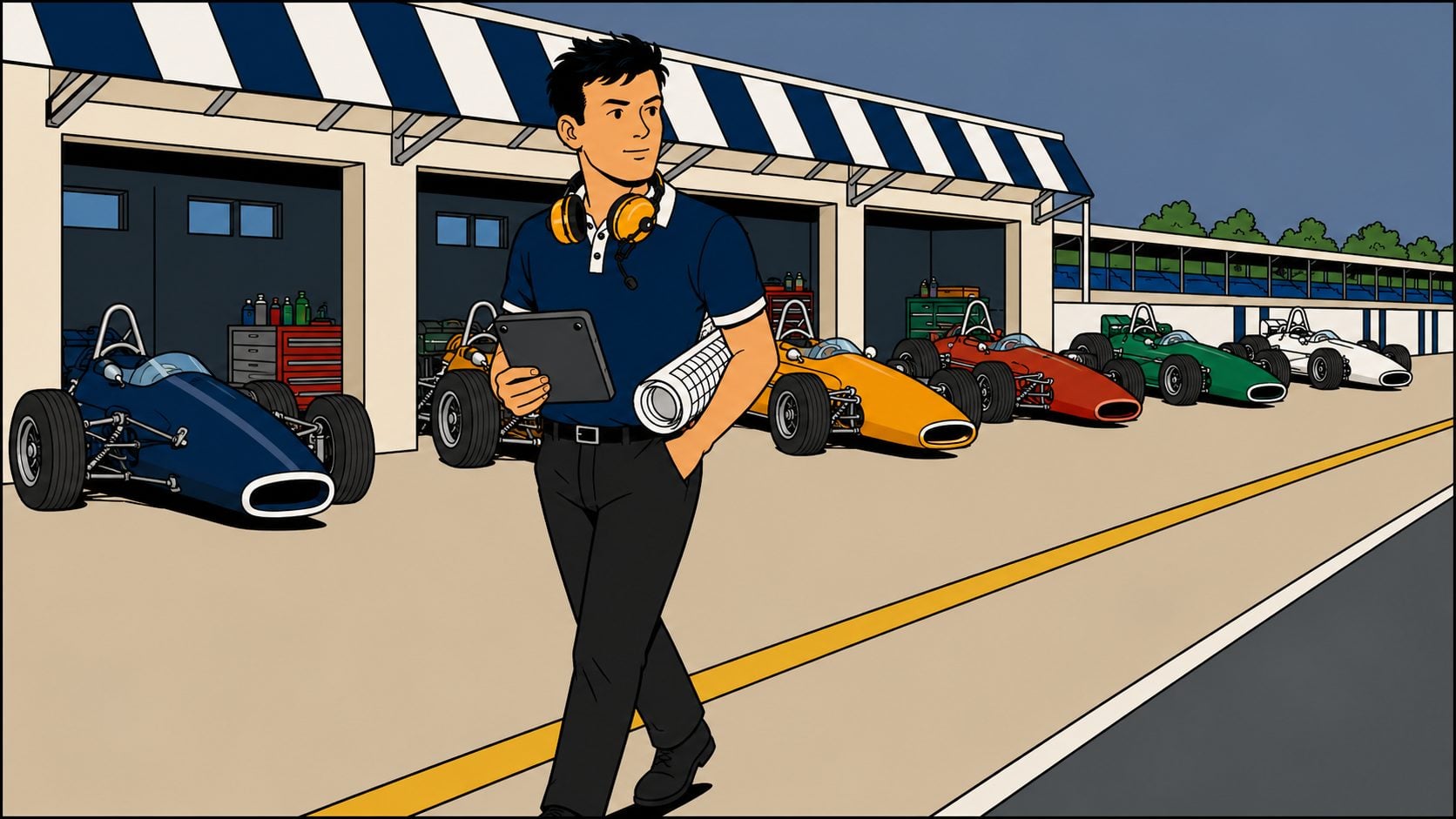
We're calling the next evolution of this model OmniFDE — and the expansion tells you everything: Omni-Platform Forward Deployed Engineering.
Same engineer. Same craft. Same embedded, build-it-with-you discipline. Different relationship with the car.
An OmniFDE walks into your garage the same way a regular FDE does — embedded, hands-on, tuning real production systems. But they don't come committed to one chassis.
They look at the problem first. Then they look at the paddock — the platforms you already own, the data, the regulatory rails, the conditions ahead. And only then do they say, "For this part, use Claude. For document extraction, this works better. For the workflow, this. For the UI, this."
Three things define an OmniFDE:
Platform-neutral by design. No license commission, no manufacturer quota, no renewal incentive that biases the recommendation. The problem picks the platform.
Multi-car fluency. Production-grade depth across at least 3–5 platforms — not generalist "we've seen them all" thinness, but genuine race-engineer-level command of each.
Architecture-first methodology. Every engagement starts with the problem and the constraints, never with the chassis the customer was last sold.
It is not a new job title. It's a positioning — and an operating model — that an external engineering practice can credibly hold and a manufacturer's own FDE structurally cannot.
5. OmniFDE vs FDE — the practical difference
DimensionVendor FDEOmniFDEEmployerThe platform vendor (Anthropic, Palantir, UiPath, etc.)An independent engineering practice
Platform coverage One car, very deep3–5 cars, deep on each
Revenue model Services subsidise platform ARRServices priced as the deliverable
Recommendation bias Inherits the manufacturer's roadmapInherits the problem's shape
Best fit for Teams committed to one chassisTeams buying results, not chassis
Sales motion Bundled with licenseStandalone engineering engagement
Renewal incentive Strong — services exist to grow ARRNone — clean delivery is the deliverable
The honest framing: vendor FDEs are not worse engineers. Many of them are world-class. They simply optimise for the wrong axis when your problem doesn't fit their car — which, in 2026, is most of the time worth solving.
Every credible analysis of the year points to the same conclusion: multi-LLM, multi-platform environments are becoming the default (Source: INRY — Knowledge 2026). The right question for engineering leaders is no longer "which AI tools do you use?" — it's "how do you architect AI so we retain optionality?" (Source: StepTo, April 2026).
OmniFDE exists to answer that second question.
6. How an organisation can adopt OmniFDE
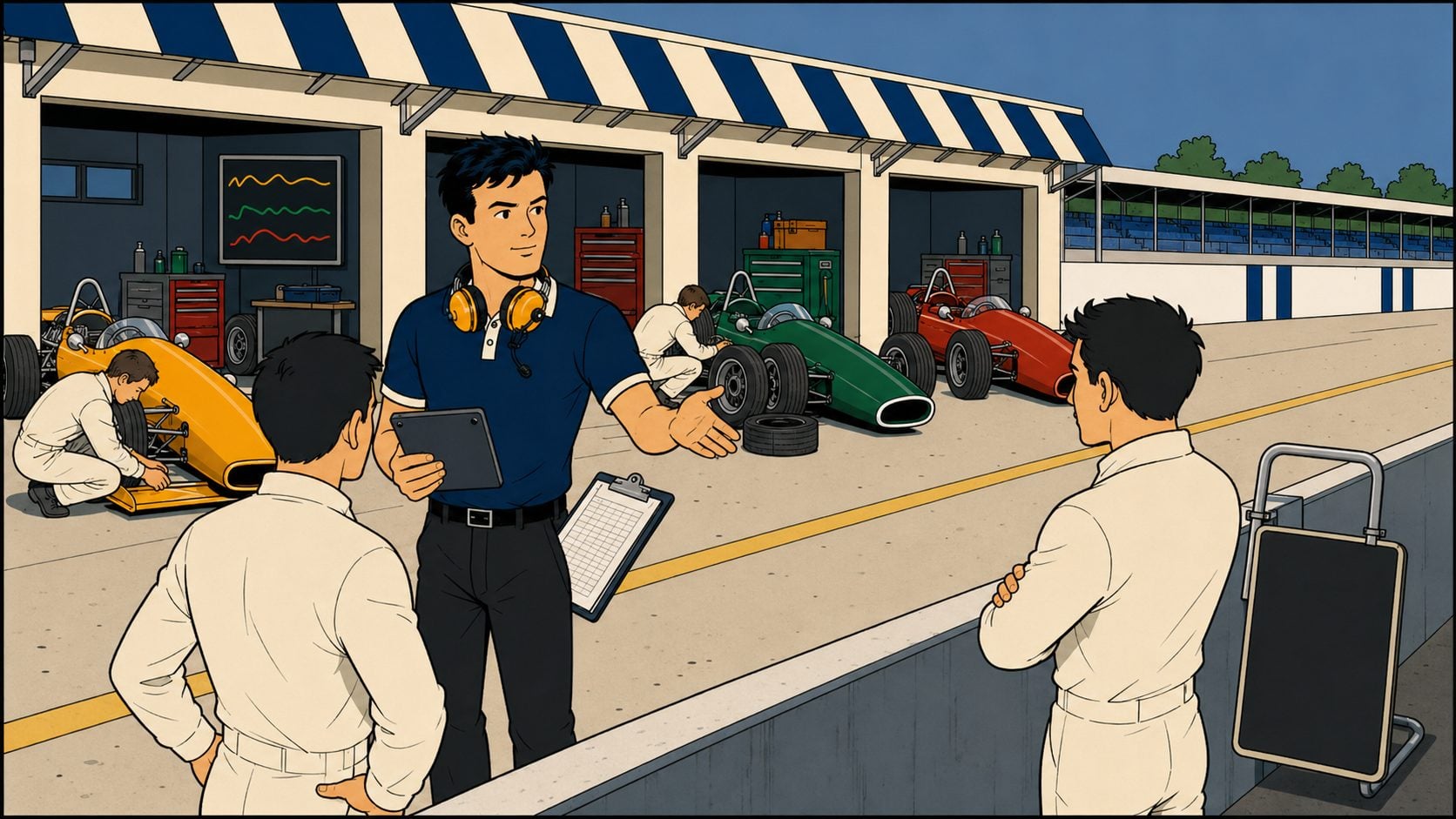
Adopting an OmniFDE model doesn't require firing your vendor relationships or rebuilding your stack. It requires a different sequence of decisions.
Step 1 — Map the garage, not the race calendar. Inventory what you already own: licenses, infrastructure, governance posture, data residency obligations. Most enterprises discover three or four cars they're already under-using (Trantor's 2026 platform guide identifies this as the most common entry-point discovery).
Step 2 — Frame problems before platforms. For every priority use case, write a one-page problem definition that names the outcome, the constraints, and the success metric. Do this before anyone proposes a chassis. This is the brief an OmniFDE designs against.
Step 3 — Engage an OmniFDE practice for the first 90 days. Bring in a small embedded team — typically 2–4 engineers — to ship the first solution end-to-end. Architecture across the platforms you already own. Working software. Evals. Runbooks. A trained internal team.
Step 4 — Build the inside team in parallel. OmniFDE is not a permanent staffing model. The point is to train your internal engineers to operate, maintain, and extend what was built — so the next race doesn't need an outside engineer at all. PwC's 2026 survey identified skills gaps as a top-3 barrier preventing AI scale (Source: PwC 2026 via RTS Labs). OmniFDE engagements explicitly close that gap.
Step 5 — Codify an Omni-Platform Architecture standard. Adopt a written internal standard that any future AI initiative must start with the problem definition and a platform-neutral architecture review — not with a vendor pitch. This is how you make OmniFDE the operating norm rather than a one-off engagement.
7. The Symprio approach — OmniFDE, operationalised
Symprio is a global enterprise AI product engineering and advisory practice headquartered in Kuala Lumpur, working across BFSI, healthcare, public sector, and enterprise mid-market. The reason OmniFDE is our operating model — and not a marketing slogan — comes down to four things:
No license revenue, no manufacturer quota. Symprio doesn't resell platform licenses. The problem genuinely picks the platform — UiPath, Anthropic, Microsoft Power Platform, Azure AI, Oracle, Google, or open source — and we tune on whichever fits.
Production-grade depth on the right cars. Our team carries certified depth on UiPath, Microsoft Power Platform, Azure AI, Anthropic, and Oracle APEX — chosen deliberately to cover the multi-platform stack most enterprise AI problems actually require.
Adopt-and-Build delivery, not staff augmentation. Every engagement transfers architecture and capability to the customer's own team. We are explicitly trying to make ourselves replaceable. That's the test.
Governance-native. We design every solution against the regulatory environment that actually applies — BNM, PDPA, AICB AI Governance, EU AI Act, HIPAA, sector-specific overlays — rather than retrofitting governance after a vendor-led build.
Within 90 days of a first engagement, the typical outputs are a working AI-enabled product in production (claims intake, AML triage, knowledge assistant, SME onboarding, finance reconciliation, or similar), a documented Omni-Platform Architecture, and a trained internal team that can extend the system without us.
That's what OmniFDE looks like when it isn't a hashtag.
8. The window is open
Forward Deployed Engineering has become a multi-billion-dollar category in less than 18 months. Every major AI vendor now has an engineering team they want to send to your garage.
OmniFDE is the version of that model that works when no single manufacturer owns the answer — which, by 2026, is most enterprise problems worth solving.
The organisations that will get disproportionate value from AI over the next 24 months are not the ones with the biggest platform license. They're the ones with the right engineer at the pit wall — the one who walks in, reads the problem first, and lets the conditions decide the setup.
9. Engaging with Symprio

Forward Deployed. Across Every Platform.
Symprio engages with enterprise leaders in three formats:
Discovery workshop (half-day, complimentary). A working session with your senior team to surface the highest-leverage AI product opportunity in your operating model — across the platforms you already own.
OmniFDE engagement (8–12 weeks). A small embedded engineering team co-builds the first production solution end-to-end, with architecture and team transfer.
Long-term partnership. Embedded OmniFDE capacity to ship an AI product portfolio over a 12–24 month horizon.
No slide deck. Just whiteboard thinking.
Sources & Further Reading
MIT NANDA — State of AI in Business 2025. nanda.media.mit.edu
Gartner via RTS Labs — Enterprise AI Roadmap 2026. rtslabs.com
Extern — Forward Deployed Engineer career guide, 2026. extern.com
Fonzi AI / Medium — Forward-Deployed Engineers: The 800% Growth Role. medium.com
MindStudio — Palantir's Forward Deployed Engineer Model Drove 640% Returns. mindstudio.ai
MindStudio — Why Anthropic and OpenAI Are Copying Palantir. mindstudio.ai
MarkTechPost — What is a Forward Deployed Engineer (May 2026). marktechpost.com
INRY — Knowledge 2026: The Next Enterprise AI Operating Model. inry.com
Trantor — Enterprise AI Platforms in 2026. trantorinc.com
StepTo — The AI Infrastructure Trap (April 2026). stepto.net
Kai Waehner — Enterprise Agentic AI Landscape 2026. kai-waehner.de
The New Stack — Forward Deployed Engineer is AI's Hottest Job. thenewstack.io
#Symprio #OmniFDE #ForwardDeployedEngineer #EnterpriseAI #AgenticAI #BuildNotBuy #AIArchitecture #VendorNeutral
Symprio is a global enterprise AI product engineering and advisory practice headquartered in Kuala Lumpur. We build AI-enabled products with our clients — vendor-neutral by design, governance-native by default. Forward Deployed. Across Every Platform.