
The three flagship LLMs in April 2026 — Claude Opus 4.7, GPT-5.5 and Gemini 3.1 Pro — each win different workloads. Here is the routing framework Symprio uses with Malaysian enterprise customers to pick the right model for the right job.
The three-horse race at the top of the LLM market got a refresh in April 2026. Anthropic shipped Claude Opus 4.7 on 16 April with a leap on agentic coding benchmarks. A week later OpenAI responded with GPT-5.5 — their first fully retrained base model since GPT-4.5 — aimed squarely at Opus's lead. Google's Gemini 3.1 Pro continues to dominate multimodal.
The right question for Malaysian enterprises is not "which one is best?" — it is "which one do I route this workload to?" This post is the decision framework Symprio uses with customers, grounded in the April 2026 benchmark landscape.
The one-line summary
- Claude Opus 4.7 — the leader for coding and agentic workloads. Best pick for AI agents that chain tools, multi-file code generation and long-running developer workflows.
- GPT-5.5 — the leader for web research and general-purpose reasoning. Best pick for research assistants, content generation and anything requiring strong BrowseComp-style web navigation.
- Gemini 3.1 Pro — the leader for multimodal and the most cost-efficient of the three flagships. Best pick for document understanding at scale, video analysis, and budget-conscious enterprise deployments that still need flagship quality.
Where each model pulls ahead — the benchmarks that matter
Agentic coding — Claude Opus 4.7 wins
On SWE-bench Pro — the benchmark that best predicts real-world agentic coding performance — Opus 4.7 scores 64.3% vs 57.7% for GPT-5.4 and 54.2% for Gemini 3.1 Pro. The gap translates directly into fewer failed PRs, fewer tool errors, and fewer agents that give up halfway through a multi-file refactor. Opus 4.7 also leads on MCP-Atlas (77.3%) and OSWorld (78.0%) — both strong proxies for agentic autonomy.
Web research and general reasoning — GPT dominates
GPT-5.4 scores 89.3% on BrowseComp — ten points ahead of Opus 4.7. If your use case involves an agent that navigates the open web, reads multiple sources, and synthesises findings, this is a meaningful lead. GPT-5.5 extends the gap further.
Multimodal — Gemini owns this
Gemini 3.1 Pro's Video-MME score of 78.2% is the largest single gap in any benchmark category — six points ahead of the next best. For document understanding across complex PDFs, video analysis, or any workload that blends text with images or video, Gemini is the default choice in 2026.

Pricing — the flagship trade-off
All three flagships sit at the top of the premium tier, but they do not price the same:
- Gemini 3.1 Pro is roughly 60% cheaper on input than Opus 4.7 — the most cost-efficient of the three.
- Claude Opus 4.7 is 17% cheaper on output than GPT-5.5, which matters for write-heavy workloads (content generation, long reports, code files).
- GPT-5.5 is the most expensive on output, but comes with the widest ecosystem of tools, plugins and routing features (Workspace Agents, Codex integration).
For high-throughput use cases, the cost delta compounds fast — we regularly see 2–3× total bill differences between "one flagship handles everything" and a properly routed deployment.
The Symprio routing framework for Malaysian enterprises
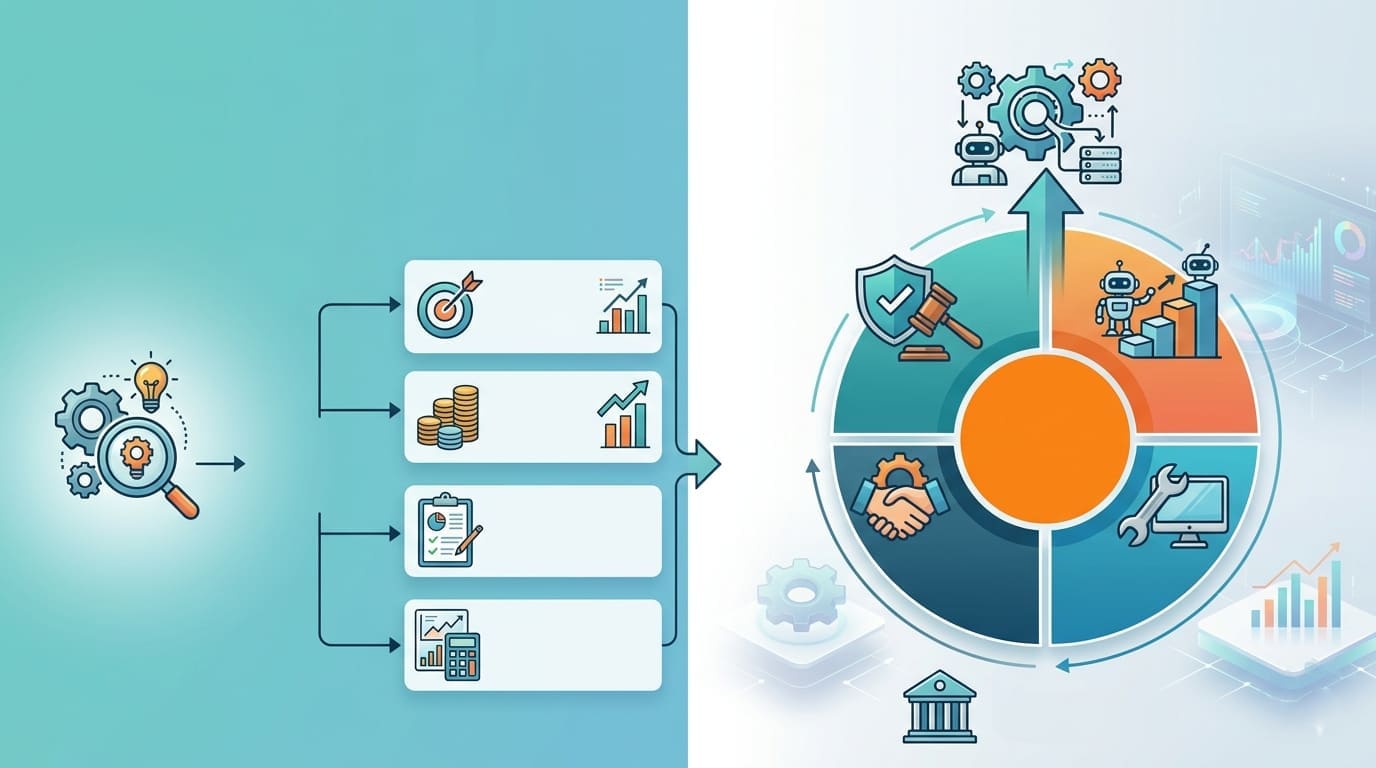
When we design an enterprise LLM workload, we classify each request by workload type and route accordingly:
- Coding agent / multi-file refactor → Claude Opus 4.7
- Code review / small diff → Claude Sonnet 4.x (mid-tier, 80% of the quality at a fraction of the cost)
- Web research agent → GPT-5.5
- Document understanding on Malaysian PDFs (bank statements, MyKad, medical reports) → Gemini 3.1 Pro
- Content generation, customer emails, summarisation → GPT-4.1 or Gemini 2.5 Flash (budget tier)
- Classification / extraction / routing → GPT-4.1 Nano or Llama 3.3 (self-hosted)
This is not vendor loyalty — it is workload-to-model fit. Any production LLM system that routes every query to a single flagship is leaving 50–70% of its potential efficiency on the table.
Data residency — the Malaysian-specific variable
None of the three flagships runs inside Malaysia today. For BNM RMiT or PDPA-aligned workloads, this has real implications:
- Azure OpenAI has Malaysian regions but lags the flagship model versions. GPT-5.5 reaches Azure Malaysia weeks to months after the US rollout.
- Anthropic on Bedrock offers regional availability but Opus 4.7 is typically US-first.
- Google Gemini on Vertex AI has Malaysia and Singapore regions with faster parity to the flagship release schedule.
- Open-source alternatives — Llama 3.3, Mistral, Qwen — deployed inside your own Malaysian infrastructure give full data sovereignty but trail the flagships by 1–2 benchmark tiers.
For regulated financial services in Malaysia, we often recommend a hybrid deployment — an open-source model handling anything that cannot leave Malaysian soil, with non-sensitive workloads routed to a flagship running on Azure or Vertex.
What to do next
If you are already running a single-flagship deployment, an architecture review usually surfaces 2–3 routing wins that cut cost significantly without degrading quality. If you are still evaluating, do not pick a model — pick a workload, benchmark the top three on your data, and build routing infrastructure from day one so switching costs stay low.
Model leadership rotates every 2–3 months in 2026. The infrastructure that lets you swap models without a rewrite is worth more than the model you pick today.
Symprio implements and operates enterprise LLM stacks for Malaysian customers across banking, insurance and fintech. Our Agentic AI practice handles model selection, routing, and BNM / PDPA-aligned deployment end to end — get in touch.
Imagery via Pexels, used under the Pexels Free License.